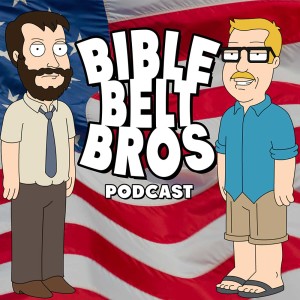
Bible Belt Bros Christian Comedy Podcast
Welcome to the Bible Belt Bros Podcast — a Christian comedy podcast where faith meets funny, and Sunday service stories turn into Monday morning rants (and sometimes spiritual revelations). Hosted by a couple of real-life bros who’ve lived through the awkward altar calls, unplanned youth group disasters, potluck politics, and worship team drama — we bring an unfiltered, light-hearted take on the real stuff that happens in church culture. Why We Started This Podcast Let’s be honest — not every church moment feels like a mountaintop experience. Sometimes, it’s more like trying to sit through a sermon when the sanctuary AC is broken in August. Other times, it’s dealing with that one guy who keeps ”prophesying” that the end is near because he missed his breakfast burrito. We grew up in the thick of church life — youth group lock-ins, church plants, VBS snack tables, and plenty of awkward moments at the altar. And while we’ve seen the beauty and power of the church, we’ve also seen the cracks — the weird, the funny, the frustrating, and everything in between. That’s where this podcast was born. The Bible Belt Bros Podcast isn’t here to bash the church. We love the Church — deeply. But sometimes, you just need to laugh at the messiness, question the weird traditions, and process the baggage that comes with being part of a faith community in a brutally honest (but kind) way. Who Are the Bible Belt Bros? We’re just two guys (and sometimes more — shout out to our guests and rotating side characters) who’ve been doing life and ministry for decades in the buckle of the Bible Belt. We’re husbands, dads, church kids, former staffers, and regular dudes who have experienced the highs and lows of faith, community, and calling. We don’t claim to have all the answers. We’re not theologians with six degrees and publishing contracts. We’re the ones who used to make youth group announcements with a kazoo and a strobe light just to keep students awake. But we’re real. We’ve got stories. And we’re not afraid to laugh at ourselves, our churches, or the ridiculous situations we all find ourselves in when we try to do life together under one steeple. What You Can Expect from Each Episode Each episode of the Bible Belt Bros Podcast is like sitting down with a couple of friends after church — you know, the conversations that happen after the Sunday service dust settles, when the ties are loosened, the coffee’s refilled, and the real talk begins. Here’s what we bring to the table: 1. Hilarious Church Stories You know that time the worship leader forgot the lyrics… to “Amazing Grace”? Or when someone got baptized and the heater hadn’t been turned on in weeks? Yeah, we tell those stories — and invite our listeners to share theirs too. Because if we can’t laugh at ourselves, we’re doing church wrong. 2. Hot Takes on Church Culture We dive into all the quirks and unspoken rules of modern evangelical life — from the politics of church potlucks to the theology of church coffee. Why is it that the drums are still controversial in some places? What’s with the “Love Offering” envelopes? And why do we all know at least one person who acts like the parking lot is a spiritual battleground? 3. Real Faith Conversations We don’t shy away from the deep stuff either. We talk about burnout, doubt, church hurt, and spiritual growth — but with honesty and a healthy dose of humor. Because real life is messy, and faith isn’t always polished. 4. Unfiltered Rants (The Holy Kind) Sometimes we just need to rant — about cheesy Christian movies, overused sermon illustrations, or how every youth camp seems to recycle the same skits from 1998. But our rants always come from a place of love and a desire to see the church thrive. 5. Relatable Guests and Stories We’ve had conversations with pastors, church planters, former church kids, musicians, and random dudes who once played Jesus in a church play. Every guest brings their unique perspective and a few jaw-dropping stories that’ll make you laugh and think. We believe church should be a place where you can be yourself. Where you can bring your doubts, your jokes, your sarcasm, and your snacks. So whether you’ve been in church since birth or are still trying to figure out if you’re allowed to laugh during prayer — we invite you to take this journey with us. The Bible Belt Bros Podcast is for everyone who loves Jesus but isn’t afraid to joke about the awkward parts of following Him with others. Come for the comedy. Stay for the community.
Episodes

Tuesday Dec 02, 2025
Marriage Expectations vs Reality with Gatlin and Maeryn
Tuesday Dec 02, 2025
Dusty and Andrew sit down with dating couple Maeryn Coonce and Gatlin Gunn for an honest, hilarious conversation about relationships, marriage, and faith.
In this episode, we dive into the gap between marriage expectations and reality—from Bible studies together to figuring out who does the cooking and cleaning. Andrew shares what surprised him most about married life (spoiler: it's not what you think), while the hosts discuss how living together 24/7 changes everything.
Maeryn opens up about her podcast "The Reason" on Spotify and how God called her to start it. She and Gatlin share their journey of staying pure while dating, their dreams of traveling and going on mission to Africa, and how their completely different upbringings have shaped their view of marriage.
The conversation covers everything from the importance of marrying your best friend to finding hobbies you enjoy together (even if that's watching your partner play Minecraft while you crochet). Plus, plenty of hilarious tangents including Gatlin making a fishing line out of yarn and a hot dog, and why he still needs his dad's permission to download apps.

Monday Nov 17, 2025
Monday Nov 17, 2025
In this episode of The Bible Belt Bros Podcast, Emma joins Andrew and Dusty to share all about her summer internship at a church in Virginia. She opens up about her calling into children’s ministry—while somehow ending up in a youth ministry internship instead. The trio dives into what it was like for her to experience a much larger church, the lessons she learned, and how it shaped her faith and future.
Meanwhile, Dusty has his own revelation: interns actually get paid now. This leads to a nostalgic detour about his glory days working at a video store—before Emma was even born. Classic Dusty humor (and awkward timing) strikes again when one of his stories nearly causes Emma to choke on her coffee mid-laugh.
It’s an episode packed with laughs, generational gaps, and a few heartfelt moments about calling, ministry, and growing up in faith—Bible Belt Bros style.

Monday Nov 10, 2025
Andrew Has FOMO But Is That Bad?
Monday Nov 10, 2025
Monday Nov 10, 2025
In this episode of The Bible Belt Bros Podcast, Andrew confesses to having a little spiritual FOMO after watching his church team jet off to Peru for a mission trip. Should he have gone too? Dusty jumps in with some throwback stories from his youth pastor days, revealing how they’d sometimes strategically use FOMO to get teens to show up—with their Bibles, their friends, and maybe even some actual excitement for church.
The guys unpack how FOMO (Fear of Missing Out) can sometimes be a good thing—especially when it pushes us toward better spiritual habits like prayer, reading Scripture, or getting plugged into community.
It’s a lighthearted, honest, and slightly sarcastic look at what it means to feel “left out” in faith—and how maybe, just maybe, God can use that feeling to pull us closer to Him.

Monday Nov 03, 2025
Get Some Rest... But Don’t Be Lazy
Monday Nov 03, 2025
Monday Nov 03, 2025
In this episode, Andrew and Dusty talk about rest — not the “hit snooze for the fourth time” kind, but the kind Jesus actually modeled. Turns out, even the Savior of the world took naps in boats, hung out on mountains, and somehow didn’t feel bad about it.
Meanwhile, Dusty admits he’s mastered the art of “holy rest,” which suspiciously looks like watching RedZone Football all Sunday Afternoon.
The guys debate whether mountain vacations or beach vacations are the superior way to recharge — but agree that both count as long as you’re not calling a Netflix marathon “quiet time.”
So kick back, relax, and remember: get some rest… but maybe also mow your lawn at some point.

Monday Oct 27, 2025
Andrew’s a Jerk (But at Least He’s Honest)
Monday Oct 27, 2025
Monday Oct 27, 2025
In this episode, Andrew and Dusty dive into the fine art of filtering yourself — or in Andrew’s case, not filtering at all. Dusty calls it “being a jerk,” but Andrew prefers “being real.” Same thing, different branding.
While Andrew’s out here saying what everyone’s thinking (and maybe shouldn’t), Dusty admits he’d rather send the joke privately — you know, just to the few people who won’t get offended and start a prayer chain about it.
Together they unpack why Christians sometimes hold back, how we accidentally hurt each other by pretending we’ve got it all together, and why being honest might just be the most loving thing we can do… even if it makes the group chat awkward.
Monday Oct 06, 2025
Airport Chaos Turns Into an Evangelism Opportunity
Monday Oct 06, 2025
Monday Oct 06, 2025
Dusty’s trip home turns into a Texas-size detour: multiple cancellations at DFW, a checked bag in limbo, and a last-minute plan to rideshare four hours to Tulsa with a total stranger in cowboy boots named Alfredo. Between airport chaos, hold music, and a lifted pickup with a mini-fridge in the back, Dusty realizes the wildest twist isn’t logistical—it’s spiritual. A guest challenge at church was fresh on his mind: share your story with someone this week. Dusty had the perfect open road, but somewhere between Fort Worth and Tulsa his new friend fell asleep, the small talk ran out, and the “Jesus conversation” never happened.
So Dusty phones a friend—Rusty—for a second opinion. They unpack what went right (a soft heart, a crazy providential story, Alfredo’s number) and what stalled out (waiting for the “perfect” moment, letting fatigue and logistics win). Rusty offers practical, even playful ways to break the ice—from simple invitations to cheesy but effective conversation starters—and pushes Dusty to follow up with a text and an invite to church. Andrew, meanwhile, provides color commentary, crisis-management digs, and a reminder that most of us miss opportunities because we don’t plan for them.
If you’ve ever wanted to share your faith but froze, this is your road-trip confessional: equal parts comedy of errors, practical evangelism coaching, and a nudge to try again. The story isn’t finished—and that’s the point.

Monday Sep 29, 2025
Monday Sep 29, 2025
Charlie Kirk’s name has been in the headlines for politics, but in this episode of the Bible Belt Bros Podcast, Dusty and Andrew focus on something different—his faith. From his bold stance on the resurrection to his insistence that Jesus was at the center of every debate, Kirk’s impact went far beyond partisan lines. The guys talk through how his journey from setting up tents on college campuses to filling arenas reflected both his influence and his ability to bring conversations back to the gospel.
That discussion leads into a bigger question: should pastors bring politics into the pulpit? Dusty and Andrew weigh the arguments around 501(c)(3) status, the tension between personal opinions and biblical truth, and whether preaching values is the same thing as preaching politics. Along the way, they admit their own disagreements, share stories from their church backgrounds, and ask what Sunday mornings are really meant for—worship or political persuasion.
This episode isn’t about rehashing headlines. It’s about wrestling with faith, influence, and the responsibility of spiritual leaders in a divided culture.

Monday Sep 08, 2025
The Episode about Forrest Frank and Miracles
Monday Sep 08, 2025
Monday Sep 08, 2025
The latest episode of the Bible Belt Bros Podcast starts off in typical fashion with hosts Andrew and Dusty playfully bickering about espresso machines and coffee preferences, but it quickly evolves into something much more substantial. What begins as a lighthearted discussion about modern music trends transforms into a profound exploration of faith, miracles, and the complicated questions that arise when God seems to answer some prayers but not others.
Dusty kicks things off with an observation about how our culture has developed an incredibly short attention span, particularly through TikTok and social media. He points out how major news stories can dominate headlines for a day or two before completely disappearing when the next viral trend emerges. This cultural shift, he argues, has fundamentally changed not just how we consume information, but how artists create music. Enter Forrest Frank, a Christian artist who has seemingly cracked the code on reaching today's generation with his faith-based content.
The hosts dive deep into Forrest Frank's musical strategy, and it's fascinating to hear them break it down. Nearly all of his songs clock in under three minutes, which might seem insignificant until you realize this is entirely intentional. Songs like "Your Ways Better" and "God's Got My Back" are specifically crafted with repetitive, catchy choruses that work perfectly for TikTok dances and viral content. Dusty explains how these aren't traditional storytelling songs like you might find in country music or classic rock – they're engineered for an audience that has maybe 30 seconds to capture before scrolling to the next video. It's actually pretty genius when you think about it, even if it represents a massive shift from how music used to be created.
The conversation takes a dramatic turn when they start discussing Forrest Frank's recent skateboarding accident and subsequent recovery. The details are pretty harrowing – while skateboarding, he hit the corner of a sidewalk with tremendous force, resulting in what appeared to be a severe back fracture. The hosts describe seeing the actual footage of the accident, the X-rays showing the break, and heartbreaking videos of Forrest Frank in excruciating pain, needing help just to get into bed. This wasn't a minor injury that could be easily dismissed; this was serious, documented medical trauma.
But here's where the story gets incredible. Exactly fourteen days after the accident, Forrest Frank woke up and began his normal morning routine. Without thinking about his injury, he picked up his child before suddenly realizing he had forgotten to put on his back brace. The shocking discovery? He felt absolutely no pain. He could twist, turn, lift, and move completely normally. When he went back for follow-up X-rays, they came back completely clear – as if the break had never happened.
Andrew, who has a healthcare background, provides a really thoughtful medical analysis of what happened. He explains why this recovery is so remarkable from a scientific standpoint. Typically, when bones heal, you see calcium deposits on X-rays, and the process takes much longer, especially for someone who isn't a professional athlete. The combination of the incredibly fast timeline, complete pain relief, and clear X-rays without any signs of the previous fracture pushes this into what he calls miracle territory. While he acknowledges that rapid healing can theoretically happen naturally, he estimates the odds at about one in a billion.
What makes this episode particularly compelling is how the hosts use Forrest Frank's story as a launching point for a broader discussion about miracles and faith. They identify three different types of miracles found in the Bible: faith-based healing, where God responds to someone's active faith; sovereign choice miracles, where God acts regardless of the person's faith or requests; and what they call circumstantial miracles, where God intervenes to protect or further His purposes. Forrest Frank's healing seems to fit into this third category – not because he had extraordinary faith or was actively seeking a miracle, but potentially because God had bigger plans for his ministry that a long recovery would have derailed.
The conversation gets really honest when they address the elephant in the room – the jealousy and frustration that some Christians feel when they see others receive miracles while they continue to wait for their own. They talk about Chance, a member of their church who has been in a wheelchair for years despite countless prayers and mission trips. The hosts don't shy away from how difficult and unfair this can feel, but they also share how Chance has chosen to embrace his circumstances rather than become bitter, even participating in church skits with humor and grace.
This leads to perhaps the most profound part of the episode, where they tackle the mystery of why God performs some miracles and not others. They reference Paul's "thorn in the flesh" that God chose not to remove, and Timothy's stomach problems that Paul simply told him to treat with wine (basically, take some medicine). The uncomfortable truth they present is that even with perfect faith, if healing isn't in God's plan, it may not happen. But they also emphasize that God can use people powerfully in their circumstances, whether healed or not.
What I appreciate about Andrew and Dusty's approach is their honesty about not having all the answers. They admit that the mystery of miracles is frustrating, especially in a culture that demands explanations for everything. They compare it to people who obsess over understanding every detail of the book of Revelation, arguing that sometimes the point isn't to have all the answers figured out, but to focus on being ready and faithful regardless of what we don't understand.
The hosts wrap up by acknowledging that Forrest Frank's story will likely follow the typical TikTok cycle – hugely popular for a brief moment before being replaced by the next viral topic. But they suggest that maybe there's something deeper here worth considering, beyond just the viral moment. Whether you classify Forrest Frank's recovery as a miracle, an incredibly unlikely natural healing, or something in between, it raises important questions about faith, expectation, and how we respond when our prayers seem to go unanswered.
Throughout the episode, Andrew and Dusty maintain their characteristic conversational style, admitting their own limitations and biases while exploring these complex topics. They're not trying to provide definitive answers or tell people what to believe – they're simply thinking out loud about a remarkable story and what it might mean for people of faith navigating similar questions in their own lives.

Monday Aug 18, 2025
Dusty is the Therapist as Andrew Vents about Church Plans vs God's Plans
Monday Aug 18, 2025
Monday Aug 18, 2025
In this episode, Dusty becomes Andrew’s therapist as he vents about basically everything.
The guys jump into a conversation that picks up from the last episode—this time digging into the idea of a whole church doing the same Bible study together. Andrew has... thoughts. Like, a lot of them. And Dusty? He mostly listens, throws in a few jokes, and keeps the mic from catching on fire.
They talk about how their church is doing a 40-day reading plan through Matthew and Romans. The idea is that everyone’s on the same page—literally. If someone in accounting is reading the same thing as someone on the worship team, it makes spiritual conversations easier and less weird. You can be like, “Hey, what’d you learn today?” and it doesn’t feel awkward.
But Andrew’s not totally sold. He’s got concerns about whether these group studies are Spirit-led or just pastor-led. He wonders if we’re really following God—or just doing what the church tells us. He brings up fasting, church schedules, leadership styles, and even his own issues with submitting to authority. It’s honest. It’s a little messy. It’s definitely real.
Dusty pushes back a bit, reminding Andrew that submitting to leadership isn’t always bad. Sometimes you just do it. Even if you don’t feel it. Even if it feels like a fad. Because growth can still happen. And also... it’s just 40 days.
They also talk about how church people are all at different spiritual levels. So one plan might feel too basic for some and too deep for others. But Dusty points out—it’s only 10 minutes a day. You can still go deeper on your own, and it might even open up chances for discipleship.
By the end, Andrew admits it’s not really a leadership problem. It’s more of a “me” problem. He’s still doing the study, even though he doesn’t love it. And Dusty, well, he basically wins therapy today.
If you've ever struggled with church plans, leadership, or just doing something you don’t feel like doing, this episode is for you. Also, if you're a tier 3 Christian subscriber... Andrew sees you.

Monday Aug 11, 2025
Dusty Gets High with Students at Camp
Monday Aug 11, 2025
Monday Aug 11, 2025
In this engaging episode of the Bible Belt Bros Podcast, hosts Dusty and Andrew dive deep into the transformative experience of youth church camp, exploring the spiritual highs, challenges, and lasting impact of these powerful ministry moments. Fresh off a week at youth camp, Dusty brings his slightly raspy voice and abundant enthusiasm as he shares firsthand accounts of what happened during their church's independent camp experience.
Camp Experience and Structure
The hosts discuss their church's decision to move away from the traditional Falls Creek camp experience, opting instead to rent out an entire camp facility for their youth ministry. This strategic choice allowed them greater flexibility, cost savings, and the ability to customize their program without being constrained by other camps' rules and schedules. Dusty explains how this approach enabled them to accommodate their growing youth group more effectively while maintaining their unique ministry style.
The camp theme "Best is Yet to Come" takes on special significance as they reveal that their current youth pastor, Kyle Henderson, will be transitioning to lead pastor in September, adding an element of transition and anticipation to the week's activities.
Daily Camp Structure and Spiritual Disciplines
Dusty provides detailed insight into the camp's daily rhythm, which was intentionally designed to maximize spiritual growth and minimize distractions. The structured day began at 7:30 AM with loud music to wake everyone up, followed immediately by mandatory quiet time with God - a practice that set the spiritual tone for each day. This was followed by breakfast, morning worship, grade-specific small group breakouts (segregated by gender and grade level), lunch, and specialized afternoon breakout sessions.
The afternoon sessions offered students choices based on their interests and calling, including sessions on ministry calling, Christian business leadership (led by Sarah from Boulder Coffee discussing the balance between service and sustainability), and worship leadership that emphasized leading people to Christ rather than just performing songs well.
Musical Worship and Camp Songs
The hosts discuss the camp's worship music, highlighting two significant songs that became anthems for the week. "Before and After" served as a powerful testimony song, particularly meaningful to Marin, a recent high school graduate developing as a worship leader. Despite losing her voice during camp, Marin's experience became a teaching moment about true worship leadership - focusing on leading people to encounter God rather than perfect vocal performance.
"Hail Hill Lion of Judah" emerged as the high-energy, participatory song that got everyone moving and shouting. Dusty notes the challenge of translating these camp-specific songs to regular Sunday morning services, acknowledging that what works in the heightened atmosphere of camp may not translate directly to weekly worship experiences.
Spiritual Moments and Conversion Experiences
The conversation takes a thoughtful turn as they address the spiritual intensity of camp, including baptisms and rededications. However, they also tackle the concerning pattern they observed of students making repeated commitments - with one student reportedly getting "saved" five times and baptized multiple times during just this one camp week. This leads to a broader discussion about the effectiveness of emotional decision-making versus genuine life transformation.
Andrew shares his frustration with what he perceives as circular movement rather than forward progress, questioning whether students are truly growing or simply repeating emotional experiences without substantial change. The hosts emphasize that their youth group "The Movement" should represent actual forward motion in spiritual growth, not repetitive cycles of the same decisions.
The Reality of "Camp High" - Biblical and Practical Perspectives
Perhaps the most substantial portion of the episode focuses on the phenomenon of "camp high" - the spiritual and emotional elevation students experience during intensive Christian retreats and camps. Rather than dismissing this experience, the hosts provide biblical grounding for understanding spiritual highs.
Dusty draws parallels to Moses' experience on Mount Sinai, where his face glowed from being in God's presence, with that glow gradually fading over time. Andrew adds the account from Mark 9, where Peter, James, and John witnessed Jesus' transfiguration and Peter's desire to build shelters and remain on the mountain permanently. This biblical precedent validates the reality of spiritual highs while also demonstrating that the normal pattern involves returning to the valley for ministry and daily life.
Understanding Why Camp High Occurs
The hosts provide practical analysis of why camp experiences are so powerful. The removal of technological distractions (all phones were confiscated) combined with structured spiritual disciplines creates an environment where students can focus entirely on God without the constant pull of social media, entertainment, and other diversions.
The daily rhythm of beginning each day with Bible study and prayer, followed by worship, teaching, small group discussion, and peer accountability, creates a spiritual immersion experience that most students never experience in their regular lives. This intensive focus on spiritual matters, combined with the community aspect of shared experience with peers, generates powerful emotional and spiritual responses.
Why the High Fades and How to Sustain Growth
The discussion acknowledges the inevitable reality that camp highs fade when students return to their normal routines. The hosts explain that students typically revert to sleeping in, consuming entertainment media, and following the same patterns that dominated their lives before camp. The structured spiritual disciplines that created the camp high are abandoned in favor of familiar comfort patterns.
However, rather than seeing this as entirely negative, they frame it using hiking metaphors. Just as mountain climbers must descend from peaks to continue their journey to other mountains, spiritual highs are meant to be launching pads for continued growth rather than permanent destinations. The valley experiences, while less emotionally intense, are where actual ministry and life application occur.
Practical Guidance for Parents
Andrew provides specific, actionable advice for parents wanting to support their children's post-camp spiritual growth. As a parent himself of a camp attendee, he shares personal insights about the unique opportunity parents have compared to youth pastors. While youth leaders might have 2-3 hours of influence per week, parents have access to all the other hours.
His recommendations include asking deeper spiritual questions rather than surface-level check-ins, inquiring about what God is teaching them, offering to do Bible studies together, asking about specific prayer needs, and demonstrating personal spiritual disciplines. He shares his commitment to pray over his daughter each morning before school as a practical way to model putting God first while encouraging her to do the same with her friends.
The hosts emphasize that parents shouldn't try to recreate the emotional intensity of camp but should focus on consistent, authentic spiritual engagement that doesn't feel forced or overly spiritualized.
Ministry Philosophy and Authentic Spirituality
Toward the episode's end, Dusty shares some vulnerable thoughts about emotional authenticity in Christian settings. He expresses concern about what he perceives as manufactured emotional responses in some worship settings, where people seem to be trying to conjure feelings rather than allowing genuine spiritual encounters to unfold naturally.
While acknowledging his introvert tendencies may influence this perspective, he advocates for authentic spiritual experiences that don't require constant emotional intensity. He distinguishes between genuine spiritual moments that naturally produce tears or strong emotions versus situations where people seem to be performing expected emotional responses.
Closing Challenges and Vision
The episode concludes with clear challenges for both students and parents. Students are encouraged to view camp as a launching pad rather than a destination, continuing the spiritual momentum rather than waiting for the next emotional high. The hosts challenge students who were baptized or made commitments to focus on baptizing others next year rather than repeating the same decisions.
Parents receive the challenge to become better spiritual leaders in their homes, recognizing that sustained spiritual growth happens through consistent daily choices rather than periodic intense experiences.
The overarching message emphasizes that "The Movement" should represent actual forward progress in spiritual maturity, not circular patterns of repeated emotional experiences without corresponding life change.
Episode Themes
Youth ministry effectiveness and authentic spiritual growth
The biblical basis for spiritual highs and their proper role in Christian development
Practical parenting strategies for supporting post-camp spiritual growth
The importance of consistent spiritual disciplines over periodic emotional experiences
Creating authentic Christian community that extends beyond camp settings
Balancing emotional authenticity with genuine spiritual transformation
This episode offers both practical ministry insights and thoughtful theological reflection on how intensive Christian experiences can be leveraged for long-term spiritual growth rather than becoming substitutes for daily discipleship.